Inside the October 2026 PCG Executive Focus Group
What happens when some of the most experienced independent pawn operators in America leave their businesses, travel from across the country, climb onto a bus together, and spend several days examining another operator’s stores from the inside out?
You get the Pawnshop Consulting Group Executive Focus Group.
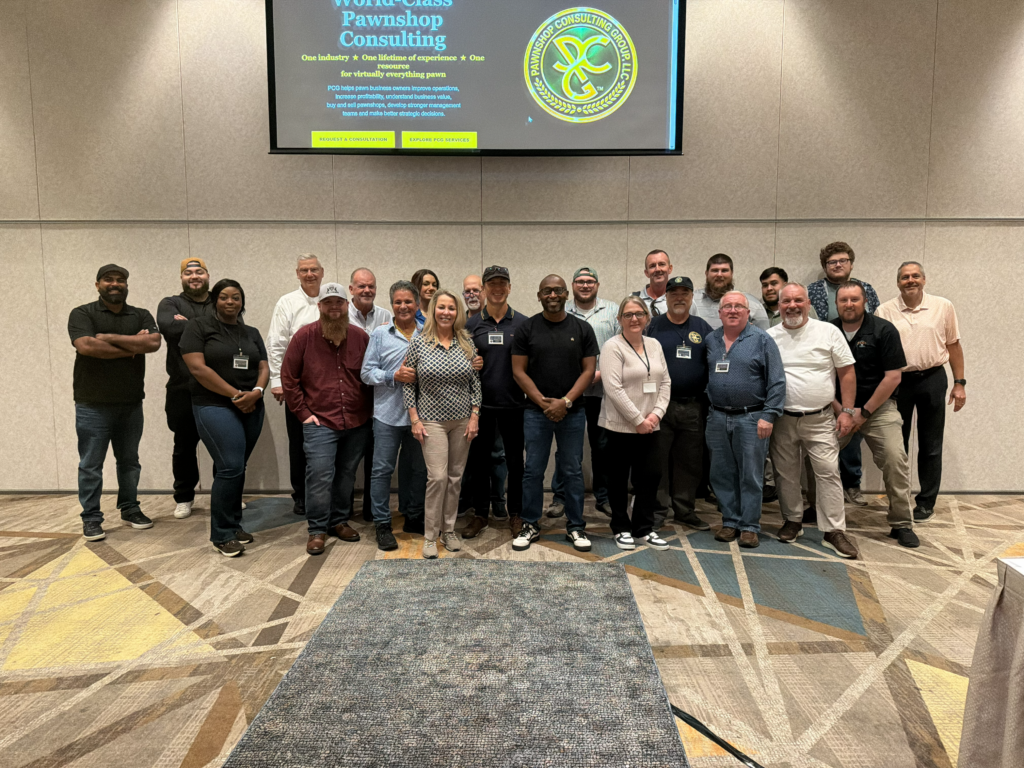
In October 2026, members of the PCG Executive Focus Group gathered in Evansville, Indiana, for our latest semiannual session.
Not every PCG Executive Focus Group member was able to make the Evansville trip because of scheduling conflicts and other commitments, so this gathering was somewhat smaller than our typical in-person session. Even so, the experience and operating depth represented in the room remained substantial.
Members traveled from California to Delaware and from numerous markets in between. Collectively, this group represents more than 500 years of pawn-industry experience.
They are owners and executives of businesses ranging from successful independent operations to some of the largest privately held multi-store pawn companies in America.
Getting that much experience into one room—or onto one bus—is no small undertaking.
Between airfare, hotels, transportation, meals, lost time from businesses, and the personal commitment required to be away from families and management teams, I estimate that our members collectively invested more than $30,000 simply to participate in this Evansville gathering.
That investment creates an obligation.
We are not there to exchange compliments.
We are there to learn.
And sometimes the most valuable lesson is discovering what not to do when you return home.
Breakfast, Bus and Boots on the Ground
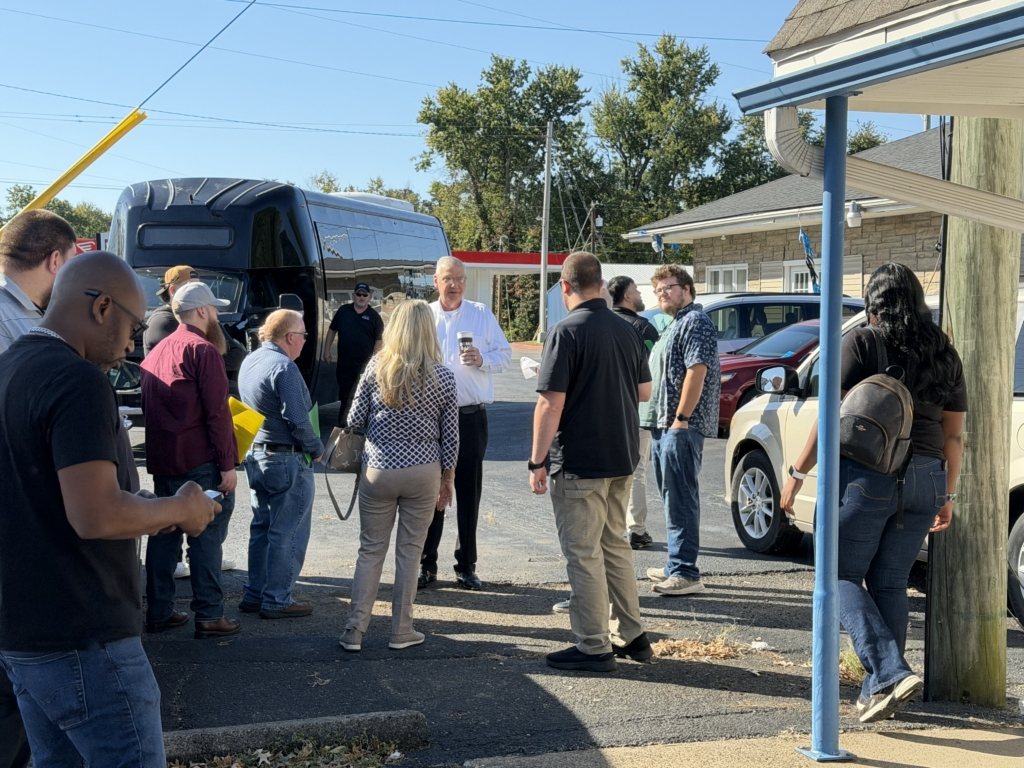
Our sessions generally begin early.
We meet for breakfast, reconnect with members, establish the objectives for the visit, and discuss what everyone should be watching for during the day.
Then we get on the bus.
There is an important reason PCG has always insisted upon physically touring the host operator’s stores.
Financial reports tell us one story.
The store tells us another.
You cannot see customer interaction on a P&L.
You cannot smell a store through an Excel spreadsheet.
You cannot determine whether the jewelry showcases sparkle, whether employees acknowledge customers, whether merchandise is presented professionally, or whether valuable space is being wasted simply by reviewing financial statements.
You have to walk through the front door.
You have to look.
You have to listen.
You have to ask questions.
And when thirty or forty experienced sets of eyes examine the same operation, very little goes unnoticed.
Touring Pawn 2 Cash
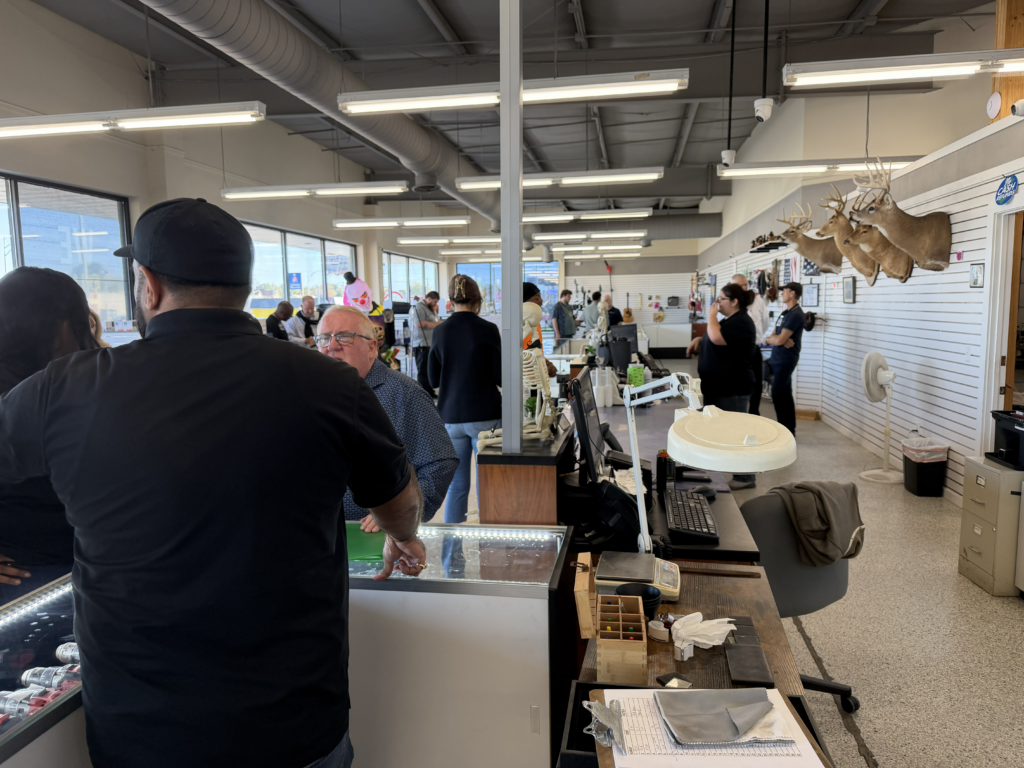
Our Evansville host was Pawn 2 Cash, and our group visited its locations on Weinbach Avenue and Diamond Avenue.
As always, our members were encouraged to examine virtually every aspect of the customer and operating experience.
That includes areas such as:
- Exterior appearance and first impressions
- Customer engagement
- Store cleanliness and organization
- Merchandise presentation
- Jewelry
- Inventory
- Security
- Employee productivity
- Backroom utilization
- Operating procedures
- Management presence
- Capital utilization
- Best practices
- Opportunities for improvement
And then we compare those observations with the operating and financial metrics.
That is where a peer group becomes considerably different from a casual store visit.
We are not touring stores to see whether we like the paint color.
We are attempting to understand why a business performs the way it performs.
Brutal Honesty Means Brutal Honesty
Anyone who has followed PCG for very long has heard me describe one of the central principles of our peer groups:
Brutal honesty.
That does not mean disrespect.
It does not mean embarrassing another operator.
And it certainly does not mean criticizing someone merely for the entertainment value.
It means that if thirty experienced operators see something that needs attention, we are going to talk about it.
If something is excellent, we say so.
If something is average, we say so.
And when something needs serious work, we say that too.
The Evansville reviews produced some of the strongest critiques we have had during a peer-group visit.
Some observations were difficult.
That is part of the process.
The owner of the host operation has several businesses and is not able to devote all of his time and attention to these individual pawn locations. Our group saw areas where greater ownership engagement, management accountability, store presentation, employee development, inventory discipline and operating execution could potentially produce meaningful improvement.
Those details belong inside the room with our members and our client.
They are not appropriate for a public blog.
But the larger lesson absolutely is.
Sometimes the Biggest Takeaway Is What NOT to Do
I made a point during our executive session that I believe deserves repeating.
These people traveled from all over America.
They left successful companies behind.
They left spouses and families.
They spent substantial money.
And they contributed several days of their lives to this exercise.
If the only lesson someone took away was:
“I am going home and making absolutely certain that this never happens in my stores,”
then the trip still produced value.
That is one of the great misconceptions about peer groups.
You do not learn only from somebody doing something better than you.
You learn from everything you see.
You may see a fantastic employee-development practice you want to duplicate.
You may discover a merchandising idea.
You may see a security practice worth implementing.
You may discover a financial metric you have not been watching closely enough.
And sometimes you see something that reminds you why standards, management presence and accountability matter.
Every visit teaches.
A Stop at One of America’s Great Legacy Pawnshops
Our Evansville itinerary also included something we do not normally incorporate into a host-store review.
We made a side trip.
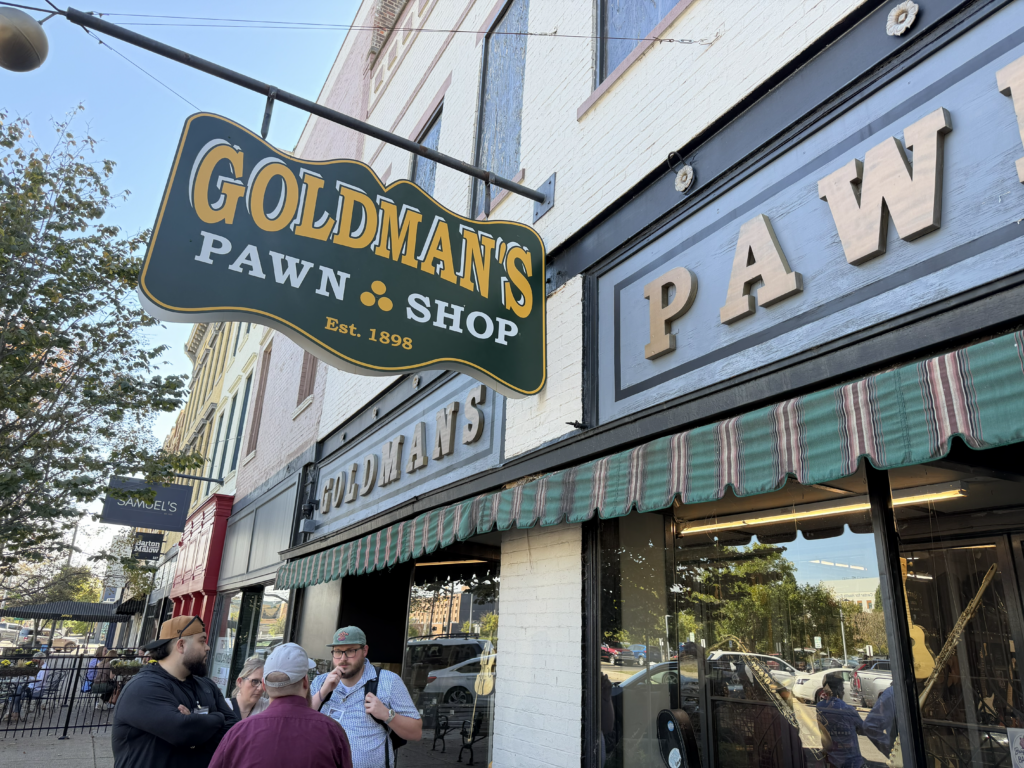
The entire PCG group descended upon Goldman’s Pawn Shop in downtown Evansville.
Goldman’s has been operating since 1898 and today represents five generations of the Goldman family in the pawn business.
Rachael Goldman, one of the fifth-generation operators, was in the store when our group arrived and welcomed us graciously.
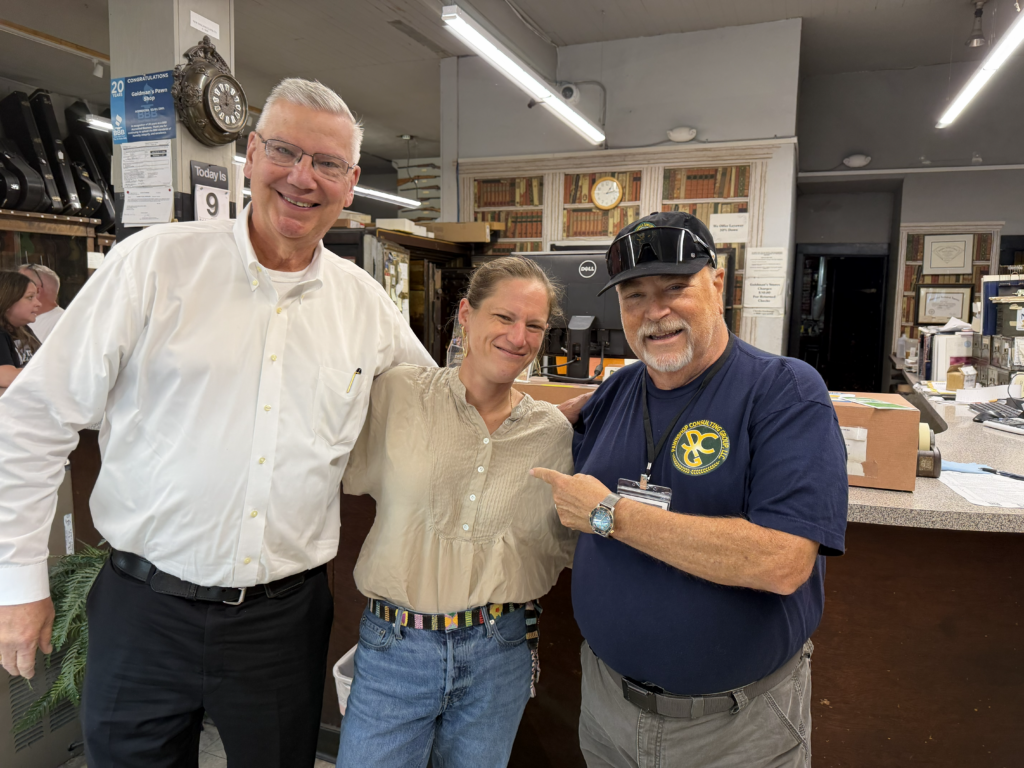
Many of us already knew Rachael through national pawn-industry events.
The visit gave our members an opportunity to see something completely different.
This is a true legacy pawnshop.
It has history.
It has personality.
It has generations of customer relationships.
It represents more than 125 years of continuity in one community.
We visited, looked around, exchanged stories, and took photographs together.
But there was also a business purpose.
When evaluating any operation, it is valuable to understand the surrounding marketplace.
What are customers accustomed to?
What other operators are accomplishing?
What does a long-established competitor look like?
What possibilities exist within that market?
The Goldman’s visit added another perspective to the Evansville experience.
And it reminded all of us that there are many different ways to build an enduring pawn business.
Then the Real Work Begins
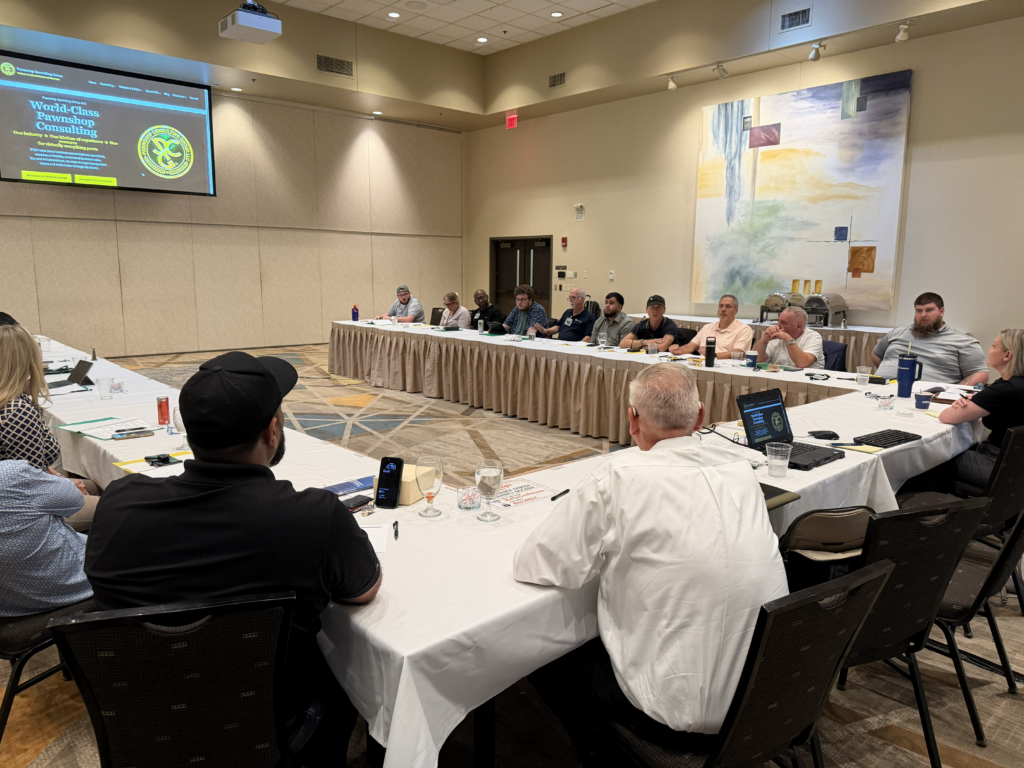
Pawnshop Consulting Group combines those store observations with financial metrics, peer critique, management discussion, and operating analysis.
After completing the store tours and having lunch, our group returned to the meeting room.
That is when observation turns into analysis.
The host company receives feedback from the members.
Good.
Bad.
And occasionally ugly.
We discuss what we observed in the stores.
Then we begin examining the numbers behind the operation.
Among the broader areas regularly examined by PCG are:
- Pawn loan balances
- Loan yields
- Inventory levels
- Inventory aging
- Inventory turns
- Retail performance
- Gross margins
- Payroll
- Employee productivity
- Operating expenses
- Cash flow
- Net operating income
- Capital utilization
We also discuss management, leadership, succession, security, technology, marketing, customer service, and whatever other subjects may materially affect the business.
The purpose is not to disclose somebody’s secret sauce.
The purpose is to ask:
What can make this company better?
And equally important:
What can every member in this room take home and use in his or her own company?
More Than 500 Years of PAWN Experience in the Room
The current PCG Executive Focus Group represents more than 500 combined years of pawn experience.
Think about that for a moment.
Within one room are people who have experienced:
- Multiple economic cycles
- Recessions
- Interest-rate changes
- Regulatory changes
- Technology revolutions
- Store acquisitions
- Store sales
- Employee theft
- Armed robberies
- Banking problems
- Inventory problems
- Management challenges
- Expansion
- Contraction
- Family succession
- Mergers and acquisitions
- Generational ownership transitions
Very few business owners will ever have access to that much relevant operating experience at the same time.
That is why membership is intentionally limited.
This is not designed to become a convention.
It is designed to remain a working group.
There Are No Spectators
Members are expected to participate.
When we visit your company, you open the doors.
When another member hosts, you show up for that member.
You walk the stores.
You pay attention.
You contribute.
You offer your experience.
And you are willing to accept the same examination when your turn comes.
That creates accountability that is difficult to reproduce anywhere else.
You cannot attend one seminar, collect a binder, fly home and forget about it.
These members see one another again.
They remember what you said you were going to change.
They ask what happened.
They celebrate the improvements.
And occasionally they remind you that you still have some work to do.
The PCG Pawn Family
The professional value of these gatherings is substantial.
But after fourteen years, something else has developed.
We have become family.
Members conduct business together.
They call each other when they have problems.
They share ideas.
They exchange resources.
They make introductions.
They celebrate successes.
They help each other through difficult periods.
And many of the professional relationships have become genuine lifelong friendships.
That is difficult to place on a financial statement.
But it may be one of the most valuable products the group has created.
What Evansville Taught Us
Every peer-group gathering is different.
Evansville provided some particularly direct lessons.
It reinforced the importance of management presence.
It reinforced the importance of accountability.
It reinforced why store standards cannot be allowed to slowly deteriorate simply because the owner is busy elsewhere.
It reminded members to examine their own inventory, their own customer experience, their own employees and their own physical operations with fresh eyes.
And it reinforced one of the most valuable questions an owner can ask:
If thirty highly experienced pawnbrokers walked into my stores tomorrow, what would they see that I have stopped noticing?
That is not always a comfortable question.
It is, however, a very profitable one.
The Work Continues
The PCG Executive Focus Group meets in person twice each year and stays connected between sessions through regular communications and periodic virtual meetings.
Each gathering creates another opportunity to compare performance, exchange ideas, challenge assumptions and strengthen relationships.
Evansville was no exception.
We toured.
We examined.
We debated.
We laughed.
We learned.
We spent time with an extraordinary legacy operator.
And we practiced the same brutal honesty that has defined this group since its creation.
Some of the best lessons we brought home were ideas we want to implement.
Others were reminders of things we never want to allow inside our own businesses.
Both have tremendous value.
After more than five decades in pawn, I continue to believe one thing very strongly:
No matter how experienced you are, there is always something left to learn.
And sometimes the person who teaches you the most is another pawnbroker willing to tell you the truth.
— Jerry Whitehead
Founder & Senior Strategic Advisor
Pawnshop Consulting Group, LLC
Put PCG Experience to Work
Have a question about your pawn business, financial performance, people, valuation or next strategic move?
REQUEST A CONSULTATION